Mukesh Ambani's Jio Hotstar gives ICC a shock, Rs 27000 crore deal stuck
Shocking news is emerging from the business and cricketing worlds. JioStar has informed the ICC that, due to financial losses, it will not be able to retain the media rights for the remaining years. As a result, the ICC has begun searching for new partners for upcoming ICC tournaments.
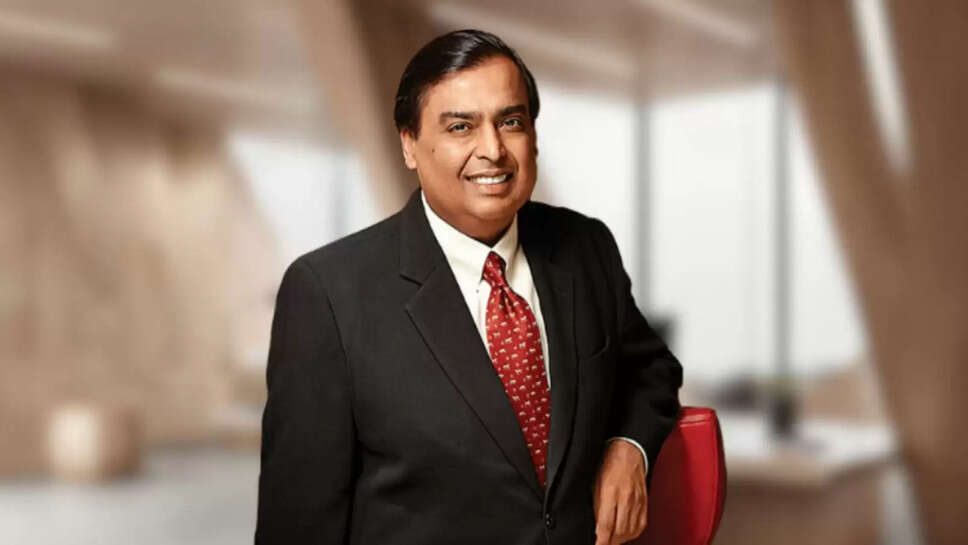
The International Cricket Council (ICC) faces a major challenge ahead of the 2026 ICC Men's T20 World Cup in the country. Reliance Industries' JioStar has formally informed the ICC that it cannot operate for the remaining two years of its four-year India media-rights deal due to huge financial losses.
An ET report quoting sources said that the ICC has initiated a new sale process for India's media rights for 2026-29 and is seeking around $2.4 billion.
The ICC's media rights for the 2024-27 cycle were valued at $3 billion, or approximately ₹27,000 crore (approximately ₹27,000 crore), with one major men's event scheduled each year.
Media reports, citing sources, said that with JioStar indicating its intention to withdraw from the contract that runs until 2027, the ICC has approached Sony Pictures Networks India (SPNI), Netflix, and Amazon Prime Video for the rights.
According to officials familiar with the discussions, no platform has shown any concrete interest so far due to pricing concerns, leaving the ICC unclear on its path forward. Meanwhile, there has been no official statement from either the ICC or any digital platform.
Understand Jio's losses through data
JioStar has more than doubled its provisions for expected losses on massive sports contracts to ₹25,760 crore in 2024-25, from ₹12,319 crore a year earlier.
The growth, as disclosed in the company's audited standalone financial statements, reflects pressure from long-term sports rights, which are expected to generate revenues lower than their execution costs.
According to a regulatory filing, Star India, before the merger with Viacom18, had reported a standalone net loss of ₹12,548 crore for the year ended March 31, 2024, primarily due to a hefty contract worth ₹12,319 crore for its ICC media-rights deal.
However, ICC reported a surplus of $474 million in 2024, reflecting the strong economics of cricket, while JioStar is incurring huge losses.
Financial Nerve Center
India accounts for nearly 80 percent of the ICC's revenue, reflecting both its dominance and the sport's dependence on a single market. Industry experts say the asking price is too high even for established players like SPNI.
Despite holding several major international rights deals, including the Asian Cricket Council (ACC) worth $170 million, New Zealand Cricket ($100 million), and the England and Wales Cricket Board (over $200 million), it has maintained a conservative approach to cricket.
India's sports rights landscape is under so much pressure that earlier this year, SPNI sublicensed the digital rights for the India-England bilateral series to JioStar to reduce its financial risk.
The pressure on JioStar, which had become cricket's largest advertiser, has increased following the ban on real-money gaming.
Industry officials said that although traditional brands have returned, no sector can fill the gap of about $840 million (Rs 7,000 crore) left by real-money gaming and fantasy platforms like Dream11 and My11Circle.
Netflix has stayed away from cricket in India, focusing on premium entertainment programming and is in the early stages of testing sports-entertainment properties like WWE, which it inherited as part of a $5 billion global deal. Prime Video's involvement with cricket is also limited.
Its New Zealand Cricket partnership for India expires early next year and it holds ICC rights in Australia until 2027. Globally, streaming platforms are investing more in live sports to counter slowing subscription growth.
Continuously decreasing profits
But with rights costs rising, especially for leagues like the NBA, NFL, and MLB, they are remaining selective, prioritizing assets that offer clear returns, rather than bidding widely for every major package. Even if the ICC ultimately fails to find a new broadcaster, JioStar will remain bound to fulfill the contract until 2027.
However, the current process for new media rights sales underscores the ongoing transformation of the sports media landscape. Even the International Olympic Committee and FIFA are finding it difficult to achieve expected valuations in India.
Officials said several factors are making potential bidders cautious. Monetization of bilateral and multilateral cricket remains limited amid sluggish advertising demand and a shrinking payment base, and continued pressure on linear TV profitability from low advertising volumes and pricing.
Broadcasters are hesitant to acquire major sports rights in the future due to the pressure of losses. Furthermore, the merger of Star India and Viacom18 with JioStar has established a stronghold in sports broadcasting, leaving only JioStar and SPNI as serious contenders, limiting the options for rights holders like the ICC.